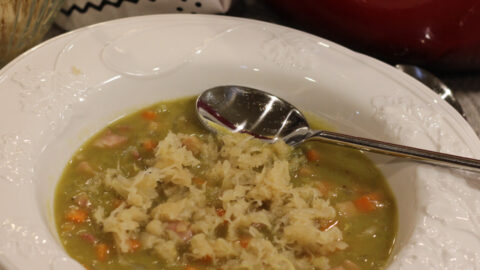

Ingredients
Equipment
Nutrition
Method
- Sort peas, removing any small stones, debris, or miscolored peas that may have mixed in during the manufacturing drying process. [1]1 pound bag green split peas
- Cover the peas with cold water and simmer gently for 2 minutes. Remove from the heat, cover, and let stand for about an hour to re-hydrate the peas.2 quarts 8 cups water
- Add the ham bone, bay leaf (if using), salt, pepper, and marjoram to the pot. Bring the mixture to a boil. Once boiling, reduce the heat to a simmer and cook for 90 minutes, stirring occasionally. [2]1 meaty ham bone, 1 Bay leaf, 1 teaspoon salt, 1/2 teaspoon black pepper, 1/4 teaspoon dried marjoram
- Discard the bay leaf and remove the bone, cut off the meat, and cut into 1/4" cubes. Return the cubed ham to the soup.
- Add the prepared onion, carrot, and celery to the pot and cook over low heat, uncovered, about 30 to 40 minutes, until the soup has thickened, the peas have broken down, and the vegetables are fork-tender.1-1/2 cups yellow onion, 1 cup carrots, 1 cup celery
- Ladle into serving bowls, and serve with gluten-free crackers, toasty garlic bread or crusty sourdough bread alongside it.
Kitchen Notes
Tips & Storage:
Add more flavor by adding a clove or two of minced garlic along with the other vegetables. If you prefer your split pea soup thicker, simmer it longer in the final step. You could also remove a cup or two to mash or blend, then add it back to thicken. Store split pea soup in the refrigerator for up to 4 days, or freeze it for up to 3 months. Footnotes:[1] Sorting Dried Split Peas for Soup
Importance of Sorting Out with the Bad: Unlike many dried beans and lentils, split peas don’t require pre-soaking, making them super simple to clean. Begin by spreading them on a clean surface to sort them and remove any shriveled, damaged, or discolored peas, small debris, stones, or other items that may have mixed in or been left in during processing. Sorting ensures that you don’t accidentally cook or eat anything unwanted. Sorting Process Spread the Peas: Lay the dried peas on a clean surface, such as a light-colored towel or a baking sheet. Inspect Carefully: Manually check for any foreign objects, such as dirt or vine chunks, or tiny rocks, and remove them. Cooking Considerations No Soaking Required: Unlike some other legumes, dried split peas do not need to be soaked before cooking, making the preparation quicker. Rinse: As a final check, once sorted, I like to rinse the split peas in a colander under running cold water, sifting them with my fingers as they’re rinsed, to remove any dirt or dust that might remain. Note that it’s good practice to rinse them just before cooking, as the peas tend to clump together if left in the colander for too long. (This can make it difficult to achieve even cooking if there are clumped peas in your pot.)[2] The addition of Bay Leaves during cooking.
While bay leaves are optional, I love adding them for their mild, herbaceous flavor and tea-like notes they impart to the soup. Adding them enhances the overall flavor without overpowering the other ingredients, providing a subtle background that makes the soup taste more balanced. Storage
Believe it or not, storing split pea soup with ham makes it even more amazing! Preparing it ahead of time enhances both the flavor and thickness. Plus, you can save any leftovers for another tasty meal that only needs a quick reheating.
Let it chill: Regardless of the reason, it’s essential to cool food quickly to minimize the risk of foodborne illness. You can accomplish this by transferring the hot soup into smaller food storage containers (I prefer glass storage containers). Leave the containers uncovered for up to 30 minutes before sealing them.
Refrigerate: Once cooled, cover the containers and refrigerate for up to 7 days.
Freeze: This soup freezes very well and can be stored for up to 3 months.
Reheating Soup
You can gently reheat refrigerated or frozen soup on the stove or in the microwave. If the soup is too thick, stir in a little broth or water until it reaches the desired consistency, then continue heating as needed.- To reheat refrigerated soup in the microwave, remove the storage cover and loosely cover it with plastic wrap or wax paper. Set the microwave to medium (60-70% power) and heat for 2 to 4 minutes, stirring occasionally, until fully heated. If the soup is too thick, stir in a little broth or water until it reaches the desired consistency, then reheat as needed.
- For frozen soup, microwave on a low setting (40-50% power) for 5 to 6 minutes, stirring occasionally and breaking up any clumps, until fully heated. If the soup is too thick, add broth or water (as in the above).
Personal Notes
Tried this recipe?
Please consider Leaving a Review!This recipe may contain affiliate links. For more information, visit our Affiliate Disclosure.
