
Ingredients
Equipment
Nutrition
Method
- Preheat oven to 400°F. Line a rimmed baking sheet with foil or parchment and set aside.
- Peel carrots and slice them into a combination of ribbons (I used a vegetable peeler) and 1/4-inch thick coins. You can cut some of the coins from the wide end of the carrot into semi-circles to maintain a more uniform size.3-4 medium whole carrots
- Toss carrots with the olive oil, honey, and a pinch of salt. Spread the carrots across the prepared baking sheet and roast for 20 to 25 minutes, stirring halfway through. You’re looking for the carrots to roast until they are tender and begin to carmelize. (I sometimes like to turn on the broiler at the last minute or two to help them caramelize.) When the carrots are done roasting, remove them from the oven to cool.2 tablespoons olive oil, 1 tablespoon Honey, pinch of Salt
- Meanwhile, as the carrots roast, add the chopped kale to a large mixing bowl. Whisk together the ingredients for the vinaigrette dressing in a separate small bowl, and pour about half of it over the kale. Massage the kale with (half) the dressing mixture (mixing it with your hands) until the fibers break down and reach your desired salad texture. This should only take a few minutes for the kale to soften.12 ounces curly-leaf Baby Kale, 1/4 cup extra virgin Olive Oil, 2 tablespoons fresh Lemon Juice, 2 tablespoons White Wine Vinegar, 1-2 teaspoons Honey, 1 teaspoon Dijon mustard, Pinch of Salt to taste
- When the carrots are completely cooled, add them with the cranberries into the bowl with the kale and gently toss to combine.1/2 cup dried sweetened Cranberries
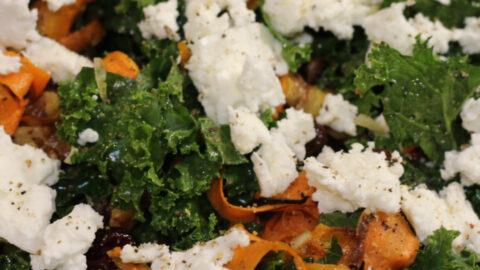
- To serve, transfer the mixture to a serving bowl or arrange on a platter. Crumble the goat cheese over the top of the salad and garnish with a few more dried cranberries if desired. Drizzle with the remaining dressing or serve it alongside.3 ounces Plain Goat Cheese
Kitchen Notes
Footnotes:
[1] If you’re not buying baby kale in a bag that has conveniently been stemmed and cut for you, follow the method below to prepare the kale:
 Storage
Any leftover kale salad tossed with the dressing can be stored in an airtight container in the refrigerator for up to 2 days.
To meal prep the salad, you can store the kale, toppings, and dressing separately.
Kale is hardy and can be washed and prepped in advance. Wash, stem, and dry the kale leaves with a salad spinner or kitchen towel. Store the leaves, wrapped in a paper towel in a zip-top plastic bag, for up to 3 days.
The dressing can be kept in the refrigerator for up to a week.
Combine the kale with the toppings and assemble the salad when you’re ready to eat!
Storage
Any leftover kale salad tossed with the dressing can be stored in an airtight container in the refrigerator for up to 2 days.
To meal prep the salad, you can store the kale, toppings, and dressing separately.
Kale is hardy and can be washed and prepped in advance. Wash, stem, and dry the kale leaves with a salad spinner or kitchen towel. Store the leaves, wrapped in a paper towel in a zip-top plastic bag, for up to 3 days.
The dressing can be kept in the refrigerator for up to a week.
Combine the kale with the toppings and assemble the salad when you’re ready to eat!
- Kale stems tend to be very tough and chewy, so you want to make sure you don’t add them to the salad. I've found that the easiest way to remove the stems is to hold the top of the kale stem with one hand and, encircling it with the other hand, slowly drag your hand down the kale stem. The leafy part of the kale will almost magically come right off as you pull down!
- After removing the leafy greens, discard the stems and chop the kale into small pieces with a cook’s knife. You’re not going for big chunks of kale – you want smaller leafy forkfuls to make the salad easier to eat when served.
Storage
Any leftover kale salad tossed with the dressing can be stored in an airtight container in the refrigerator for up to 2 days.
To meal prep the salad, you can store the kale, toppings, and dressing separately.
Kale is hardy and can be washed and prepped in advance. Wash, stem, and dry the kale leaves with a salad spinner or kitchen towel. Store the leaves, wrapped in a paper towel in a zip-top plastic bag, for up to 3 days.
The dressing can be kept in the refrigerator for up to a week.
Combine the kale with the toppings and assemble the salad when you’re ready to eat!Personal Notes
Tried this recipe?
Please consider Leaving a Review!This recipe may contain affiliate links. For more information, visit our Affiliate Disclosure.
